
Bulk Event Swag Without Chaos: A Planning Playbook
Plan bulk event swag with confidence: forecast quantities, lock lead times, proof artwork, add shipping buffers, and prevent partial deliveries.
1) Start with demand math (so you don’t order on vibes)

Bulk event swag gets chaotic when quantity decisions happen late or based on guesswork. For event-planning teams running school fundraisers, corporate events, or community runs, start with a simple forecast: expected attendance × uptake rate + a controlled buffer. If 400 people register and you expect 60% to take a novelty item, that’s 240 units. Add 10–15% for walk-ups, replacements, and “I need one more” moments, and you land at ~270–280. This is the core of sane bulk-orders planning.
Next, translate demand into pack logic. Decide what must be identical (to avoid sorting on event day) and what can vary (colors, themes, or sizes). If you’re doing fundraising bundles—like themed rubber ducks for a PTA table—build quantities around case packs (e.g., 25s or 50s) and keep a small “overflow” pack separate. The goal is to reduce handling steps and protect fulfillment accuracy: fewer SKUs to count, fewer chances to miss, and faster setup when the doors open.
2) Build a timeline that respects lead times, proofing, and buffers
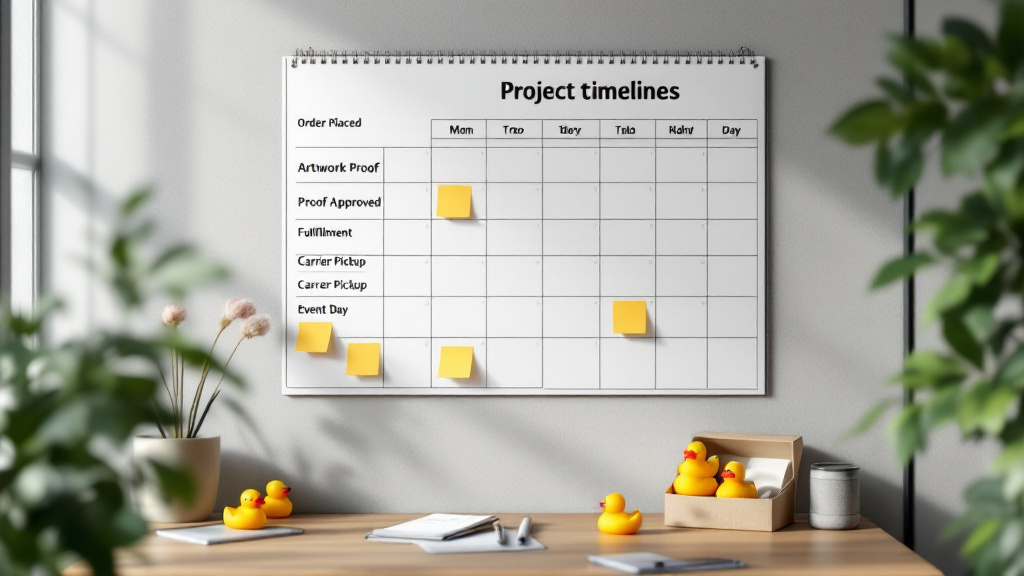
The most reliable playbook for logistics is backward planning from “event starts.” Count back your drop-dead date (when swag must be in-hand), then add buffers for carrier variability and internal setup. A practical rule: plan for production/pick-pack time + transit + 2–5 business days of cushion, especially during peak shipping seasons. For event-planning teams, that cushion is what prevents late-night runs to buy substitutes.
Customization is where timelines often break. If you’re adding card inserts, labels, or simple artwork (common for fundraising or sponsor activations), schedule a proofing window: 24–48 hours for initial proof review, plus at least one revision cycle. Lock down brand assets early—vector logo, approved colors, and short copy—to avoid “final-final” file churn. When ordering from a D2C storefront that supports lightweight customization (e.g., a custom insert on a bulk pack), confirm what’s included, what triggers extra time, and when your proof must be approved to protect the promised ship date. Treat proof approval as a milestone, not a footnote.
3) Prevent partial deliveries with packaging and shipping decisions that de-risk event day
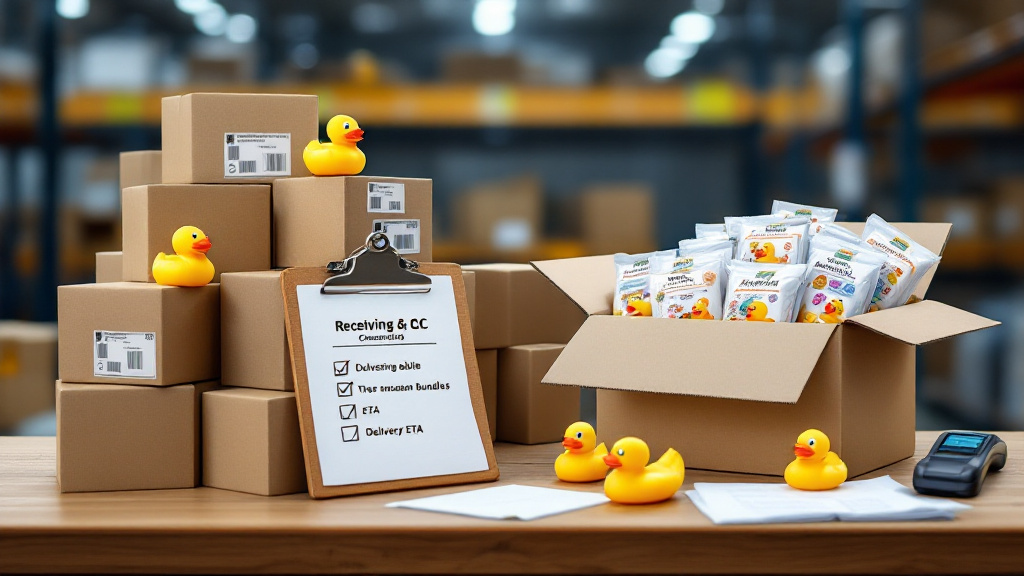
Partial deliveries are the silent killer of bulk-orders: you end up running a fundraiser table with half your inventory, or you can’t complete attendee bags. To avoid this, align packaging with how you’ll distribute on-site. Request pre-built bundles (e.g., 10-pack or 25-pack kits) instead of loose singles when possible, and keep one clearly labeled “emergency overage” pack sealed. This improves counting speed and reduces the chance that fulfillment errors are discovered only after setup.
On shipping, optimize for “arrive together.” If your order must ship in multiple cartons, ask whether it will be split across different warehouses or carriers—and whether tracking will be consolidated. Use a single ship-to location that can receive deliveries during business hours (school office, company mailroom, or a reliable coordinator), and avoid deadlines that require same-day staging. For logistics resilience, schedule delivery 3–7 days before the event and designate a check-in process: verify carton count, scan tracking numbers, and spot-check one pack for theme accuracy and print quality. That small inspection step protects your event-planning credibility and keeps fundraising momentum intact.